It’s the elephant in the football stadium.
This spring, commencement speakers will address universities that have been subjected to unprecedented presidential extortion. Students have been snatched off the street by masked men—in some cases deported—simply for fleeing violence in their home countries or writing a newspaper op-ed. Graduates will be entering industries upended by White House censorship and draconian funding cuts.
Faced with this onslaught, the assorted dignitaries and distinguished alumni invited to impart wisdom to the Class of 2026 confront a fraught question: Do I address what’s happening to our democracy?
The prudent answer would seem to be a resounding “no.” Raising hot-button issues can sour an otherwise joyous occasion. In our deeply divided nation, any whiff of politics will inevitably alienate some listeners. Then there’s the oft-unspoken reason: fear. Administration critics have often been on the receiving end of enraged, poorly-punctuated presidential “Truths,” sometimes followed by falling stock prices, cancelled shows, and pink slips. (Fortunately, the Pope answers to a higher power.)
I sympathize with speakers who’d prefer not to court controversy. As a longtime speechwriter, I’ve helped write some of those safer remarks.
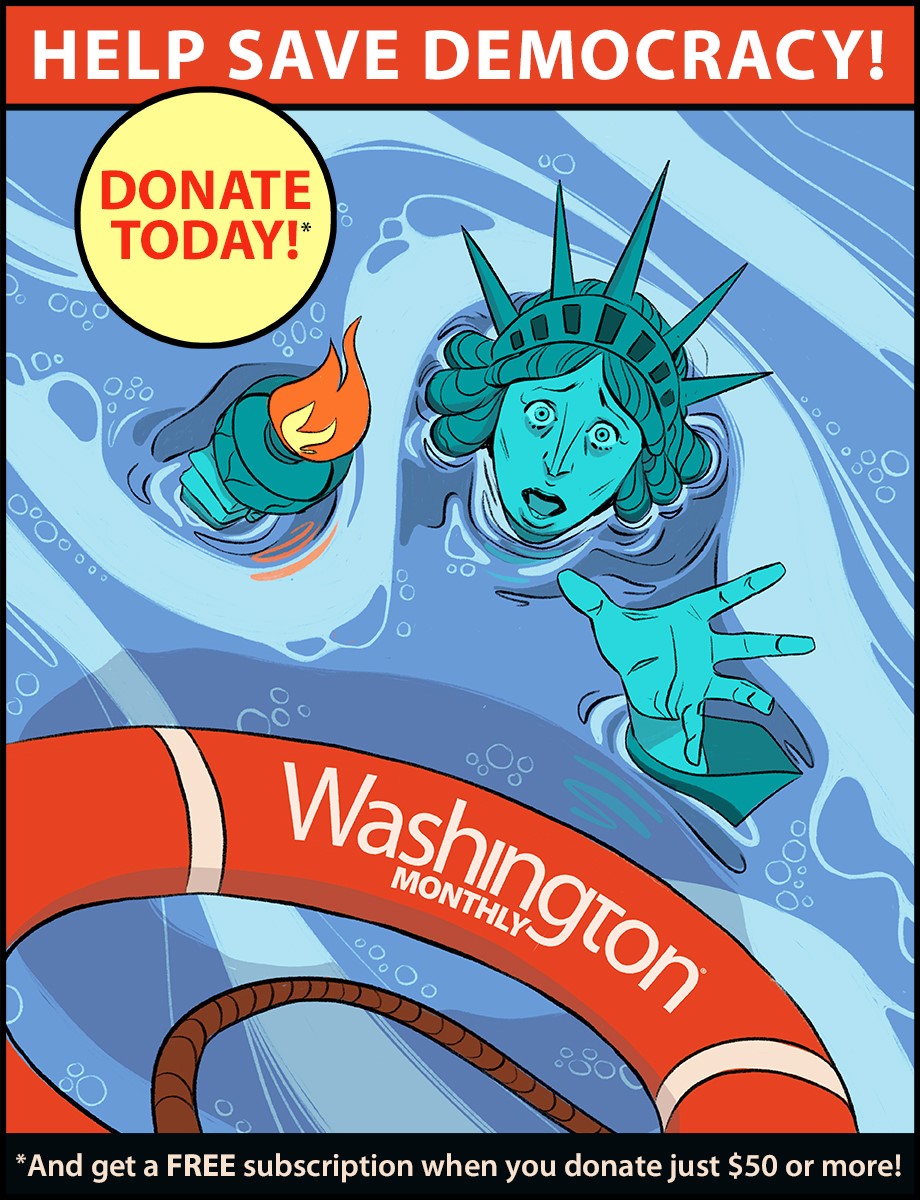
But the fact that someone might hesitate to share their opinions publicly lest the President of the United States smite them with a tweet underscores the profound crisis in our democracy. Recycling inoffensive anecdotes while this administration smashes constitutional guardrails and basic standards of decency is the graduation equivalent of fiddling while Rome burns. Leaders granted a platform to counsel the next generation have a moral responsibility not to pretend this is business as usual.
And where better to sound the alarm than college campuses? Contrary to what Fox News might claim, universities are not committed to producing dyed-in-the-wool Democrats. They are committed to producing small-d democrats. Sticking up for free speech or free elections is entirely appropriate at institutions dedicated to educating engaged citizens.
Gen Z also prizes authenticity and disdains bullshit. A speaker could gloss over how volatile tariffs and spiking oil prices are wreaking havoc on their businesses or how the FCC is jawboning their outlets to produce favorable coverage. But graduates need only venture to the nearest gas station—or turn on CBS—to puncture those sanitized narratives. By ignoring the obvious, a commencement headliner risks looking tone-deaf and undermining their credibility.
So how might someone speak honestly about this perilous moment without turning a graduation ceremony into the Democratic National Convention?
First, use humor. Counterintuitively, lightening the mood can make an audience more receptive to difficult subjects. At UCLA’s commencement last year, the singer-songwriter Sara Bareilles spoke of feeling “shocked and enraged by what I see unfolding in our government and on our streets”—but also sprinkled in jokes about her cancelled TV show, falling in love with a gay man, and even her anti-anxiety medication (“If you come for my Lexapro, I will cut a bitch.”) One sociology grad offered a succinct review of the poignant but light-hearted speech: “She killed it.”
Second, applaud universities’ own efforts to stand up for democracy. Unlike the disappointingly servile and self-serving response from too much of corporate America, America’s institutions of higher education have more readily lived up to their higher calling. At the urging of students, professors, and alumni, schools from Notre Dame to the Pennsylvania College of Art and Design have spoken out—and, in Harvard’s case, even sued the administration—rather than make Stephen Miller the arbiter of academic freedom. DC college students and faculty staged walkouts to protest the deployment of the National Guard to our nation’s capital. Celebrating graduates for their contributions to this fight acknowledges the threat while keeping the focus where it belongs: on them.
Third, offer lessons from your own experience. Was there a time when you learned the importance of speaking truth to power? A moment in your career when you stood up for the vulnerable? Those examples—more than platitudes about finding their passion—are what today’s graduates need as they navigate the wreckage of our supposed “New Golden Age.”
Fourth, use language that can bridge divides. Journalist Scott Pelley urged the Wake Forest University Class of 2025 to be “fierce defenders of democracy,” focusing on principles like truth rather than partisan name-calling. Harvard graduate student Yurong “Luanna” Jiang used a beautiful story about her and her friends deciphering a Chinese-made washing machine to celebrate our shared humanity—without once mentioning diversity or immigration. Slinging terms like “racist” or “fascist” may feel satisfying, but it forces partisans into their bunkers and reduces the likelihood your message will be heard.
Finally, in the words of slain gay rights activist Harvey Milk—whose name the administration recently stripped from a Navy ship—“You have to give them hope.” The Trump era has brought a distressing amount of cruelty, corruption, and cowardice. It has also yielded astonishing acts of everyday courage. Remind graduates about the federal prosecutors and public health officials who’ve resigned rather than violate their consciences. Share how, in the dead of winter, the people of Minneapolis protected their neighbors from out-of-control immigration enforcement. Inspire students to imagine how they themselves might safeguard our improbable experiment in self-governance as it marks its 250th year.
At Stanford University’s 2016 commencement, the documentary filmmaker Ken Burns made waves when he delivered an unvarnished attack on Trump’s fitness for office. In an open letter after Trump’s shocking 2016 victory, a graduate named Nathalie Weiss recounted her initial discomfort with Burns’s remarks. Yet as she reckoned with the implications of the election, Weiss had reconsidered. “You were holding us to a higher standard than you would have in a normal year, because this is not a normal year,” she wrote. “Thank you … for stripping down ceremonial gaieties in order to address the student body with candor.”
Not every commencement speaker needs to go as far as Burns. But to overlook or sugarcoat our reality is to treat those on the cusp of adulthood as children. Our democracy hangs in the balance. We shouldn’t be afraid to say so.