I have been trying to figure out how to sum up the punishing experience we’ve all had over the last year-plus of watching what’s happened to our country, explain what this magazine has tried to do about it, and lay out what to expect from us in the new year. Let me try to do that by telling the story of two all-staff Zoom meetings we had at the Washington Monthly, 12 months apart.
The first was on November 6, 2024, the day after Donald Trump won reelection. I began the meeting by acknowledging that the situation was “very, very, very bad” and that our staff was feeling miserable and defeated. I also noted that the Washington Monthly had been handed a rare opportunity: It could help set the long-term agenda for the opposition—and the country. Trump and his MAGA allies would make moves that would “horrify the same public that elected them,” I predicted, adding that “the role of this magazine is to get the American people ready with ideas they can use when the opportunity arises.”
Over the next 12 months, we did our best to seize that opportunity. While not shirking the duty to document the second term’s dangers, we tried to keep a cool head, refrained from chasing every nutty thing the president uttered, and concentrated our efforts on crafting policy ideas that MAGA opponents can use to win back power. These ideas addressed why we believe Trump was reelected: his promise to overturn the existing order to benefit the least affluent 60 percent of voters whose circumstances have stagnated for decades, thanks to bad decisions made in Washington by both parties.
Please Donate to the Washington Monthly. It’s tax-deductible.
Convinced that Trump would fail to fulfill that promise, we devoted our first 2025 print issue to “Ten Ideas for the Democratic Party to Help the Working Class, and Itself.” These ranged from providing the growing ranks of the self-employed with portable benefits and relief from monopoly predation to creating a new deal between Washington and universities to make tuition free for moderate-income students. In subsequent weeks and months, we proposed bringing back “regulated competition” in the airline industry to spur innovation and lower costs for travelers in “flyover” country. We called for more vigorous antitrust enforcement to combat corporate “greedflation.” We published a series of stories laying out a post-Trump industrial policy for America that incorporates positive aspects of the administration’s approach while rejecting what’s insane. We urged Democrats to play offense with creative plans to save Social Security, organize rural America, and provide relief to the 165 million voters suffering skyrocketing costs in employer-provided health care plans. Meanwhile, we took the respectful but critical measure of the new policy ideas promoted by our friends in the “abundance liberal” movement to address the housing and climate crises by cutting red tape and regulations. And we predicted that Trump’s draconian immigration raids and indiscriminate federal workforce cuts would sit poorly with the public, that his aggressive mid-decade redistricting push would backfire, and that, overall, his policies would lead millions of Trump voters to have buyer’s remorse.
The second all-staff Zoom meeting occurred on November 5, 2025, the day after the off-year elections. This time, our staff was feeling jubilant—and vindicated. Democrats, both moderate and socialist, had swept races in red and blue states by margins far beyond what most polls anticipated. They had done so by tying their GOP opponents to Trump, whose polls had indeed cratered, and running on populist “affordability” policies of the kind the Washington Monthly has long advocated.
In the last two months, Trump’s approval rating has plummeted further. Democrats have won more special elections by lopsided margins. And the Washington Monthly continued to expose underappreciated GOP policy failures that infuriate swing voters, such as cutting funding for nurses’ graduate education to fund tax cuts for the wealthy, and how to fix such fiascos. In 2026, we’re going to continue this work with stories about, among other things, how to lower grocery prices and ensure that Trump’s damage to our governing institutions is temporary, not permanent.
Please Donate to the Washington Monthly. It’s tax-deductible.
Journalism has a crucial role to play in helping lead us out of our national calamity. Unfortunately, traditional news outlets, while vigorously and often bravely reporting on the crisis itself, are uncomfortable offering solutions with the same purpose and energy, lest they be accused of “bias.” The Washington Monthly has no such concerns. The same methods that the best journalists use to root out problems—rigorous reporting, fearless questioning, listening to all sides, clear writing—we apply to surfacing and articulating policy solutions.
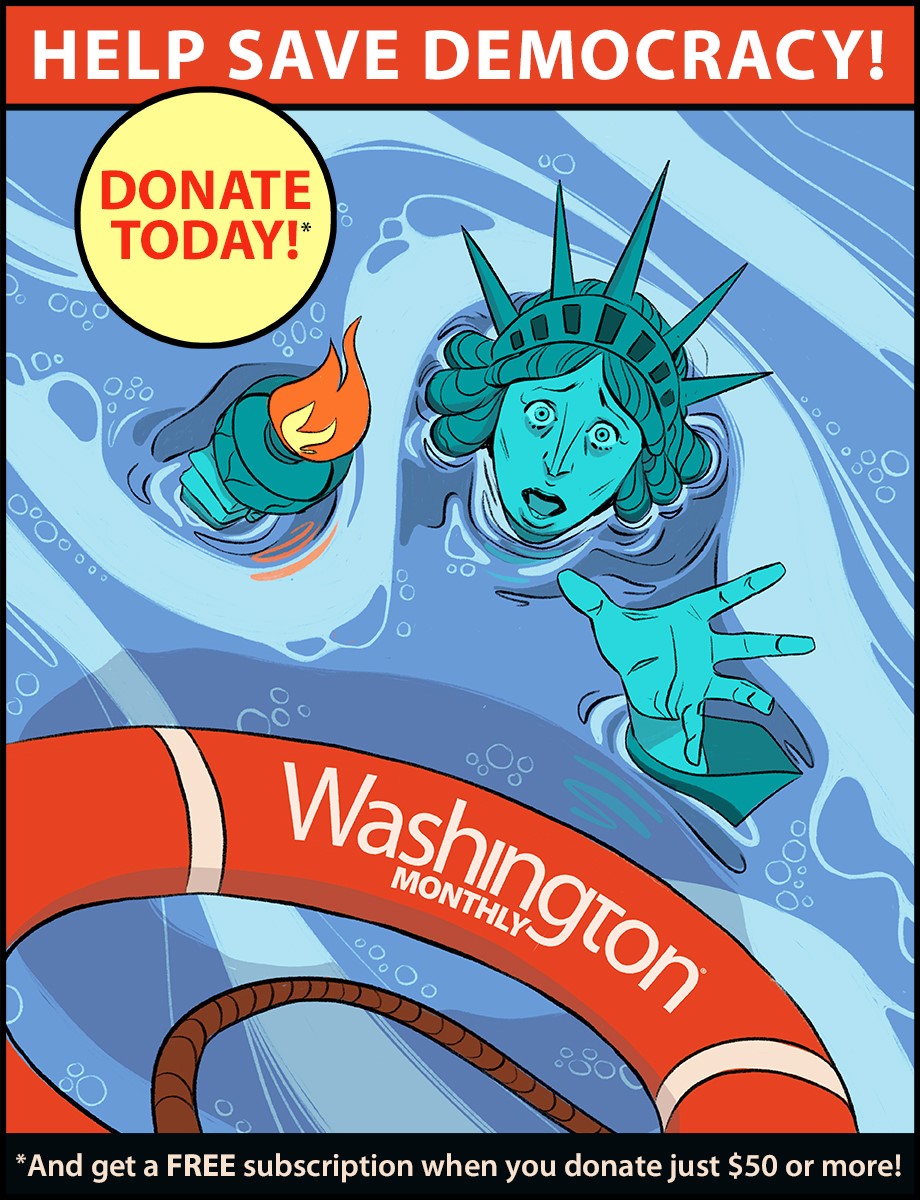
Because you’re reading this, I presume you agree and maybe want to be part of our effort. You can help by sending our stories to friends, family, and anyone in your network. You can also support us. We’re a nonprofit and depend on donors like you. We need you to be a part of this. Now. You can make your tax-deductible donation to the Washington Monthly here. Give $50 or more, and we’ll send you a print subscription to the magazine for free. It’ll help us to keep going forward at this perilous time.
Thank you and happy New Year.
All the best,
Paul Glastris
Editor-in-Chief