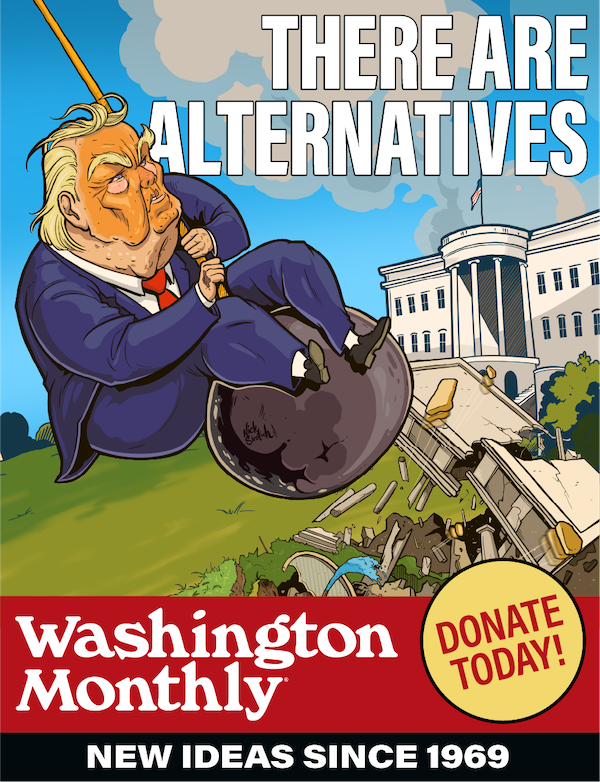
I just posted something on the Washington Post’s Monkey Cage blog. It essentially points out that while Trump is exactly the kind of demagogue the Framers worried about, pretty much every political party leader is exactly the kind of demagogue the Framers worried about: modern parties and modern communications (by modern communications I mean U.S. […]
Andrew Sabl
Andrew Sabl is a Visiting Professor in the Program on Ethics, Politics, and Economics and in Political Science at Yale University.
Posted inPolitics
Why Empirical Political Scientists and Political Theorists Talk Past Each Other
The latest issue of Perspectives on Politics, which just went up, includes my article “The Two Cultures of Democratic Theory: Responsiveness, Democratic Quality, and the Empirical-Normative Divide.” I’m always behind the times when it comes to paywalls, but here’s my best shot at a link for “blogging”: The Two Cultures of Democratic Theory: Responsiveness, Democratic […]
Posted inPolitics
Toleration: As American as George Washington
Writing a book about toleration is a funny thing. There are some political values that everyone claims to be for while arguing about what they are: e.g. freedom, justice, and since 1945, democracy. There are other values whose meaning seems relatively clear (meaning that there’s room for several books about what they mean but not […]
Posted inPolitics
On Baltimore: Imprudent Protests and Real Grievances
Regarding what’s going on in Baltimore, there are three separate questions. First, are the citizens of Baltimore (especially the African-American ones) justified in noting, and opposing, what seems on excellent evidence to be rampant, long-standing, and unpunished violence committed by police? Second, is rioting, including the burning down of a drugstore and a half-built community […]
Posted inPolitics
Liberalism Doesn’t Just Displace Arbitrary Power. It Reduces It.
Paul Krugman in a recent post argues that opposition to the welfare state is rooted in attachment to “traditional hierarchy”: Both social insurance and civil rights are solvents that dissolve some of the restraints that hold people in place, be they unhappy workers or unhappy spouses. And that’s part of why people like me support […]
Posted inPolitics
Not Logic but Experience: Why I Was Wrong About the ACA Then, and Will Be Right in the Future
The Affordable Care Act turned five years old yesterday. As any honest parent knows, that’s a common occasion for saying, “thank goodness: we survived.” And it’s as good an occasion as any for me to write a post I’ve been considering for some time but never got around to because I lacked the time for […]
Posted inPolitics
The One Candidate Who Could Still Challenge Clinton (But Probably Won’t)
Jonathan Bernstein gives (and Ed Kilgore endorses) plenty of reasons to think that it will be hard for any Democrat to challenge Hillary Clinton for the nomination. Both focus on the actions of the party elites—broadly understood—who decide the nomination. Ed notes that the analogy of 2008 is inapt, since at this stage back then […]
Posted inPolitics
Days of Glory: The Case Against
Happy Bastille Day. As a liberal and an American, I can think of no better way of celebrating it than by defending American individualism against French (small-r) republicanism, the pursuit of happiness against compulsory fraternity, and personal lives in all their diversity against the longing that citizens all hold the same purpose in common (and […]
Posted inPolitics
Care About Presidential Power? Stay Out of Quagmires.
It was posted ages (a day) ago, but amidst all the double-bank-shot, speculative gaming of the political situation regarding Syria, I think this simple, strong insight (from Jonathan Bernstein) is well worth noting: [T]here’s one permutation that absolutely, no question about it, would destroy the rest of Barack Obama’s presidency is: a disastrous war. Ask […]
Posted inPolitics
Russia Has a New Way to Get Customers to Buy Stuff, and It’s Really Creepy
From a New York Times article today on technology to track shoppers’ movements in stores through their cell phones: Synqera, a start-up in St. Petersburg, Russia, is selling software for checkout devices or computers that tailors marketing messages to a customer’s gender, age and mood, measured by facial recognition. “If you are an angry man […]