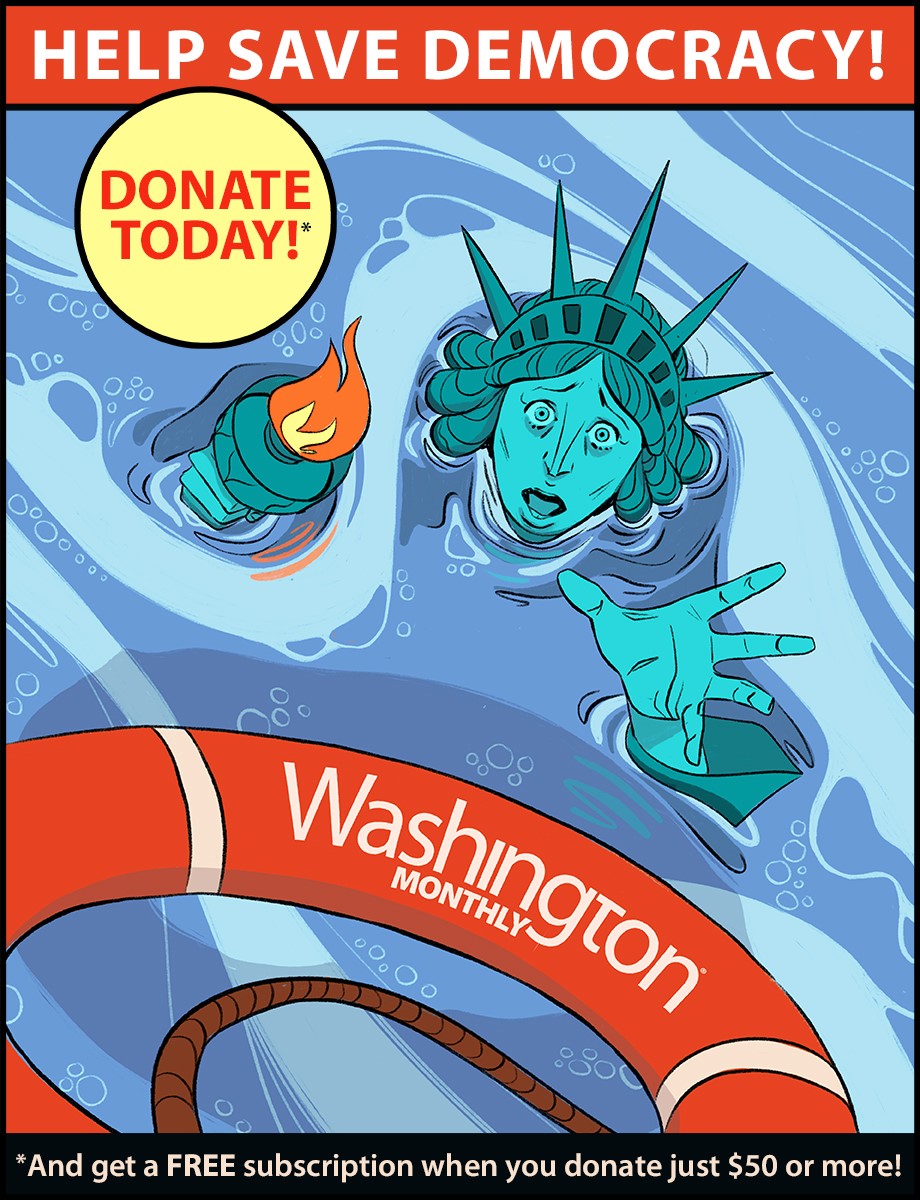
Back in the good old days, the only suspense around Election Day involved the results of various contests and not so much the mechanics of the vote.
This year, the elections themselves are clouded by unknowns—the result of President Donald Trump’s relentless lies about the integrity of the U.S. election system.
Armed federal agents could descend on the polls, along with an onslaught of partisan “observers.” The act of casting a ballot could be fraught. Lawsuits are likely to muddy the outcomes, which could stay unsettled for days or for weeks. The Trump administration has already preemptively challenged Alaska’s results, presaging more litigation to come. Worst-case scenarios of federal interference include the potential seizure of voting machines or the mass disenfranchisement of mailed-in ballots. Some have even raised fears that a “rogue clerk” in the House could refuse to seat duly elected members. (Experts say this is unlikely.)
Despite all these risks and worries, there’s still one bedrock certainty: If you are a U.S. citizen, you have the right to vote, and you alone have the choice to exercise it.
As a nonprofit, we can’t tell you what to do. But don’t lose your chance to help set the direction of the country. You may very well not get another.
Don’t miss at the Monthly…
Could a Blue Wave wash away Trump? Jonathan Alter argues that a massive Democratic win could effectively end the Trump era: “Fear would dissipate, leaving only loathing.” Read Alter.
Trump’s election lawsuits: All hat, no cattle. In contrast to the sensational headlines that have accompanied Trump’s attacks on the U.S. election system, voting rights expert Josh Douglas counsels calm. “Rest assured: None of the lawsuits have merit, and courts will surely reject them,” he writes. Read Douglas’s explanation why.
How Volodymyr Zelensky stood up to Trump—and won. When the Ukrainian president dared to criticize Trump’s decision to buy diesel from Russia, many feared instant retaliation. Instead, reports Kyiv-based journalist Tamar Jacoby, Zelensky has emerged on top. “Zelensky judged the political moment more shrewdly than Trump did and has rallied world opinion to his side,” writes Tamar. But the big question is whether Zelensky’s edge will last. Read Jacoby.
Plus…
- Are GOP pollsters skewing the midterms again? Politics Editor Bill Scher has the answer (and it may surprise you). And in his second column for the week, Bill notes how the same progressive candidates the Democratic establishment once tried to beat are now enjoying the party’s full support.
- The health care lobby bet on the right. But it’s a bet that could backfire if power shifts on the Hill, writes health care journalist Merrill Goozner.
- Horrified by the price of that iPhone? Blame “chipflation,” writes Joel Dodge.
Parting Note
Who counts in America?…
Voting booths aren’t the only place where the Trump administration is working to ensure that some people in America don’t count.
Last month, the administration proposed a dramatic overhaul to the U.S. Census that could potentially exclude millions from the official tally of the U.S. population and obscure crucial demographic data.
One proposed change is to add a citizenship question, which would presumably serve as a mechanism for excluding refugees, asylum seekers, visa holders, and other legal immigrants from the census, as well as those without documentation. Many households would likely not respond to the census questionnaire at all, for fear of triggering the attention of ICE. A second proposal bans questions on race, ethnicity, and sexual orientation. (The census doesn’t currently ask about sexual orientation directly, btw). Taken together, these two changes would have profound impacts on politics and public policy, as well as how America sees itself.
The latter point—about the census as a reflection of American identity—is something I didn’t fully appreciate until I spoke with Margo J. Anderson, a distinguished professor emerita at the University of Wisconsin-Milwaukee. Anderson is the nation’s pre-eminent historian of the U.S. Census, and her book, The American Census: A Social History, is a masterpiece of social narrative. In charting the history of the census, she demonstrates its power in shaping public policy and national self-perception.
That’s exactly why Trump has made the census a target. By erasing the existence of millions of people, he hopes to recast our national identity to reflect the xenophobic white nationalism of MAGA. On a practical level, he hopes to strip disfavored states of representation and funding while elevating those in his base.
But if Trump thought the census was too obscure or too boring to change without protest, he was mistaken. As of Friday, nearly 84,000 people had submitted comments to the U.S. Census Bureau about the proposed changes, and this feedback has been overwhelmingly negative. (By comparison, about 35,000 people commented on the White House ballroom.) And it’s not too late to offer your thoughts—the comment period closes at 11:59 p.m. tomorrow, November 2.
In the meantime, you can watch my conversation with Dr. Anderson on Substack, where she offers some surprising insights into the history of the U.S. Census and how it’s been used over time. (It’ll also be available Wednesday on our podcast.)
You’ve made it through another newsletter!
Thanks for your readership and support, and we at the Monthly would be grateful to you for spreading the word.
Stay tuned also for the launch of The Reader, coming November 16. This sister site will be the Monthly’s new hub for book reviews, essays, author Q&As, and more.
Have a great week!
Anne Kim, Senior Editor